
How to Practice Speed Reading Daily
Imagine you're a busy professional who manages to finish a 300-page report in just two hours, freeing up time for other priorities. You might wonder how you can replicate this skill on a daily basis. Establishing a consistent routine and employing specific techniques can greatly enhance your efficiency, but knowing where to start can be intimidating. Are you ready to explore effective strategies that not only boost your speed but also improve your retention and comprehension?
Assessing Your Reading Speed

To effectively evaluate your reading speed, start with a simple self-test. Grab an unfamiliar text and set a timer for one minute. As you read, count the number of lines you complete. After the minute is up, calculate your words per minute (WPM) by multiplying the number of lines by the average number of words per line. This quick exercise is a great way to kick off your journey into evaluating your reading speed and comprehension. Regular practice and active reading techniques can greatly improve your results.
The average adult reads between 200-300 WPM, with fast readers often exceeding 400 WPM. By understanding where you stand, you can identify areas for improvement. Try using tools like Word Statistics for digital texts; they can help you measure your reading speed and track your progress over time.
Regularly timed reading sessions are essential. They allow you to compare your calculated reading speed with your comprehension results. Establishing a baseline reading speed through consistent evaluation brings you closer to your goals. With this knowledge, you'll be able to engage in targeted practice, leading to a gradual enhancement of your reading efficiency. Embrace this journey, and watch your skills flourish!
Techniques for Effective Speed Reading
While enhancing your speed reading skills, you'll find that employing specific techniques can greatly boost your efficiency. Start by using the hand pacing technique. Move your finger or a pointer across the page to help maintain focus and increase reading speed. You should also practice reading chunks of words together instead of individually. This will minimize eye stops and enhance your reading efficiency.
Skimming and scanning are essential techniques for effective speed reading, as they allow you to quickly identify key information. Focus on the first and last sentences of paragraphs to grasp main ideas. Additionally, tackling subvocalization is vital. Chewing gum or counting in your head can help reduce this vocalization, ultimately improving your reading speed.
Don't forget to regularly time your reading sessions. Set specific speed goals and track your progress over time. This way, you'll steadily increase your words per minute (WPM). Incorporating these techniques into your daily routine will make a significant difference. Remember, reading every day not only builds your skills but also transforms your understanding of texts. Embrace these techniques for effective speed reading and watch your abilities soar!
Enhancing Memory and Focus

Enhancing memory and focus is vital for anyone looking to improve their speed reading skills. When you engage in regular memory exercises, like memory grids and number games, you can considerably boost your working memory and overall cognitive function. This improvement helps you retain information more effectively while speed reading. If you dedicate just a month to consistent practice, you'll likely notice a remarkable enhancement in your ability to recall details and comprehend text quickly.
Incorporating brain training exercises, such as touch typing for note-taking, can further strengthen your cognitive abilities related to reading and memory retention. Remember, adequate sleep and maintaining a positive emotional state are essential for ideal memory function. Neglecting these aspects can make it harder to focus and absorb information.
Additionally, using visualization techniques, like mind mapping, allows you to create associations with what you read. This strategy leads to better retention and improved focus during your speed reading sessions. By nurturing your memory and honing your focus, you'll set yourself up for success as you dive deeper into the art of speed reading. It's all about building a strong foundation for your learning journey.
Training Your Peripheral Vision
Training your peripheral vision is a game-changer for speed reading, as it lets you recognize multiple words at a glance. By enhancing your peripheral vision, you can reduce the number of eye movements needed, boosting your reading efficiency. To start, try engaging in letter and number grid games. These fun exercises can improve your letter recognition and overall visual volume, crucial components for effective training.
You might also explore word deciphering games focusing on bigrams and trigrams. These activities can help you quickly identify words, allowing you to process large amounts of information in a shorter time. Research shows that fast word recognition, aided by trained peripheral vision, is essential for increasing your reading speed. You'll find yourself capturing more words without shifting your focus as much.
As you practice these exercises regularly, you'll notice improvements in your ability to read swiftly and efficiently. Not only will you be able to read more words per minute, but you'll also enjoy the experience more. So, embrace these techniques and watch as your speed reading skills flourish!
Expanding Your Vocabulary

To boost your speed reading skills, expanding your vocabulary is essential. A rich vocabulary enhances your reading comprehension and allows you to recognize and understand words faster. When you encounter new texts, whether they're novels, articles, or academic papers, you'll naturally pick up new terminology. This exposure is key to growing your vocabulary.
Try using flashcards or vocabulary apps to reinforce new words and their meanings. This technique can help you retain what you learn, making it easier to recall during your reading sessions. Additionally, challenge yourself with more difficult materials. This not only introduces you to new words but also encourages you to use context clues to figure out meanings.
Research shows that those with a larger vocabulary can process information more efficiently, which leads to improved overall reading performance and speed. So, don't just settle for your average reading; immerse yourself in diverse materials, and actively engage with new words. The more you practice, the easier it becomes to navigate texts, ultimately boosting your speed reading skills. Remember, every new word you learn is a step toward becoming a more confident reader!
Effective Reading Strategies
To boost your speed reading skills, it's essential to prioritize key information and utilize effective reading tools. Focus on skimming for main ideas and scanning for critical details, which helps you grasp content without getting bogged down by every word. By incorporating techniques like reading in chunks and utilizing visual aids, you'll not only read faster but also retain more of what you learn.
Prioritize Key Information
Effective reading strategies hinge on your ability to prioritize key information. Start by focusing on the first and last sentences of paragraphs. This technique helps you quickly grasp main ideas without having to read every word. As you read, utilize headings and subheadings, along with visual cues like bold or italicized text. These elements guide you to key topics, making the reading process smoother.
To boost your reading speed and comprehension rate, skim for keywords, such as proper nouns and adjectives. This allows you to capture essential information while cutting down on unnecessary reading time. After finishing a section, take a moment to summarize the main ideas. This practice reinforces your understanding and retention of key points.
Engaging in timed reading sessions regularly can also help you develop the ability to prioritize key information. Gradually increase your reading speed while honing in on what truly matters. By implementing these strategies, you'll not only become a faster reader but also deepen your comprehension, ensuring that you get the most out of every text. Embrace this journey, and watch your reading skills flourish!
Utilize Reading Tools
While you might be tempted to dive straight into reading, utilizing specific tools can greatly enhance your speed and comprehension. Start by employing hand pacing techniques. Use your finger or a pointer to guide your eyes across the page. This simple action sharpens your focus and boosts your reading speed.
Next, try skimming and scanning strategies. Quickly identify keywords and main ideas, allowing you to extract essential information without reading every single word. Instead of focusing on individual words, practice reading chunks of words together. This reduces the number of eye stops and increases your overall speed.
Regular speed reading drills are also essential. Set timed reading sessions to condition your eyes and brain for faster processing without losing comprehension. Finally, incorporate visual aids like mind maps or highlighted text to reinforce key concepts. These tools help improve retention of the material you read.
Daily Reading Routine

To boost your speed reading skills, it's essential to establish a consistent daily reading routine of 15 to 30 minutes. Using habit trackers can help you stay on course and monitor your progress effectively. Plus, mixing up your reading materials will not only challenge you but also expand your vocabulary and comprehension, making your practice more rewarding.
Establish Consistent Schedule
Creating a consistent daily reading routine is essential for mastering speed reading. By dedicating just 15 to 30 minutes every morning or evening, you can practice speed reading techniques that gradually increase your reading skills. Aim to read faster and expand your understanding over time.
To help you stay on track, consider using a habit tracker. This simple tool can remind you to practice at least five days a week, building a lasting habit that sticks. Incorporate speed reading exercises, like timed sessions and comprehension assessments, into your routine. These activities not only track your progress but also enhance your skills, making you even more efficient.
Setting specific goals can keep you motivated. For instance, challenge yourself to increase your reading speed by 50 words per minute each month. This gives you a tangible target to aim for and helps maintain focus. Finally, create a distraction-free environment. Minimizing interruptions during your reading sessions can greatly boost your concentration and learning efficiency. By establishing this consistent schedule, you'll be well on your way to becoming a more proficient reader.
Utilize Effective Tools
Building on your daily reading routine, utilizing effective tools can amplify your speed reading practice. Start by dedicating 15-30 minutes each day to focus on speed reading techniques. To keep you on track, consider using habit trackers. They help maintain consistency and let you celebrate your progress toward your reading speed goals.
Integrate focus timers into your practice sessions. A good method is reading for 50 minutes followed by a 10-minute break. This approach minimizes fatigue and boosts concentration, ensuring you stay engaged with the material.
Additionally, using visual aids can greatly enhance your understanding. Mind maps or highlighting key terms can reinforce what you read, helping retain essential information.
Tracking Your Progress
Tracking your progress in speed reading is vital for understanding how well you're improving over time. Start by establishing a reading log to document your daily reading sessions. Note the time spent and the number of pages or words read. This simple act of tracking your progress helps you see patterns and growth.
Regularly utilize online speed reading tests to measure your words per minute (WPM). These tests not only gauge your speed but also your comprehension scores. Setting specific reading goals, like increasing your speed by 10% each week, keeps you motivated. Adjust these goals based on your tracked progress, ensuring they remain challenging yet achievable.
After each reading session, maintain a record of your comprehension scores. This helps you correlate your speed with your understanding, allowing you to identify areas needing improvement. At the end of each month, take a moment to review your progress. Analyze trends in your reading speed and comprehension, so you can refine your practice techniques and set new targets. Remember, tracking your journey is essential, and every small step brings you closer to becoming a more skilled reader.
Tools for Speed Reading
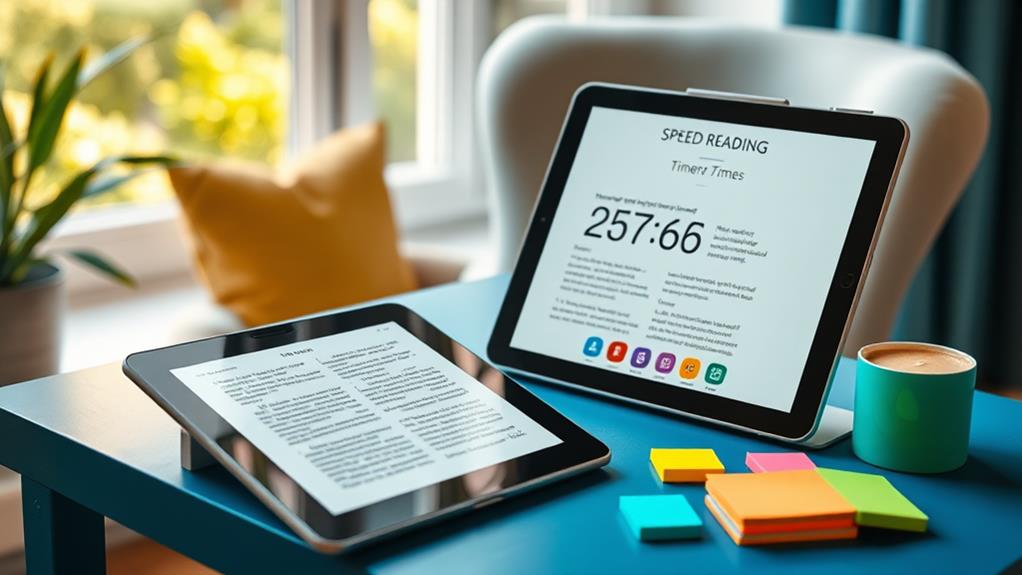
Having a solid grasp of your progress paves the way for exploring various tools that can further enhance your speed reading skills. There are some fantastic options you can immerse yourself in. For instance, Iris Reading offers live classes and online video courses, teaching you effective speed reading techniques. If you want to combine science with practice, consider 7-Speed-Reading (Spreeder). It uses proven learning methods to help you read effectively while maintaining comprehension.
For those looking for budget-friendly options, Eye-Hop by Alchemy Training Unlimited is a free tool designed for practicing word-group reading. It's a great way to improve your skills without spending a dime. Additionally, digital applications or software that track reading speed can help you monitor your progress, allowing you to set achievable milestones.
Lastly, implementing techniques like hand pacing, scanning, and using summary tools can greatly enhance your focus and retention during speed reading exercises. By integrating these tools for speed reading into your routine, you'll find yourself gaining a better understanding of the material, making your reading experience more rewarding. Start exploring these tools today, and watch your speed reading skills flourish!
Frequently Asked Questions
How Do I Train Myself to Speed Read?
"Practice makes perfect." To train yourself in speed reading, embrace techniques like visual exercises and focus improvement. Combine comprehension strategies with daily sessions, and you'll see progress in understanding and speed. Keep pushing yourself!
Can You Practice Speed Reading?
Yes, you can practice speed reading. By using techniques like word chunking and daily exercises, you'll find a comprehension balance. Plus, software tools can enhance your skills, making your practice more enjoyable and effective.
What Is the Best Way to Improve One's Speed in Reading?
To improve your reading speed, experiment with various reading techniques and comprehension strategies. Focus on your eye movement, create ideal reading environments, and practice regularly to see noticeable improvements in both speed and understanding.
Will I Read Faster if I Read Everyday?
Imagine words flowing like a river as you read every day. You'll boost your speed through effective reading techniques, refine comprehension strategies, and develop daily habits that enhance time management. Yes, you'll definitely read faster!
